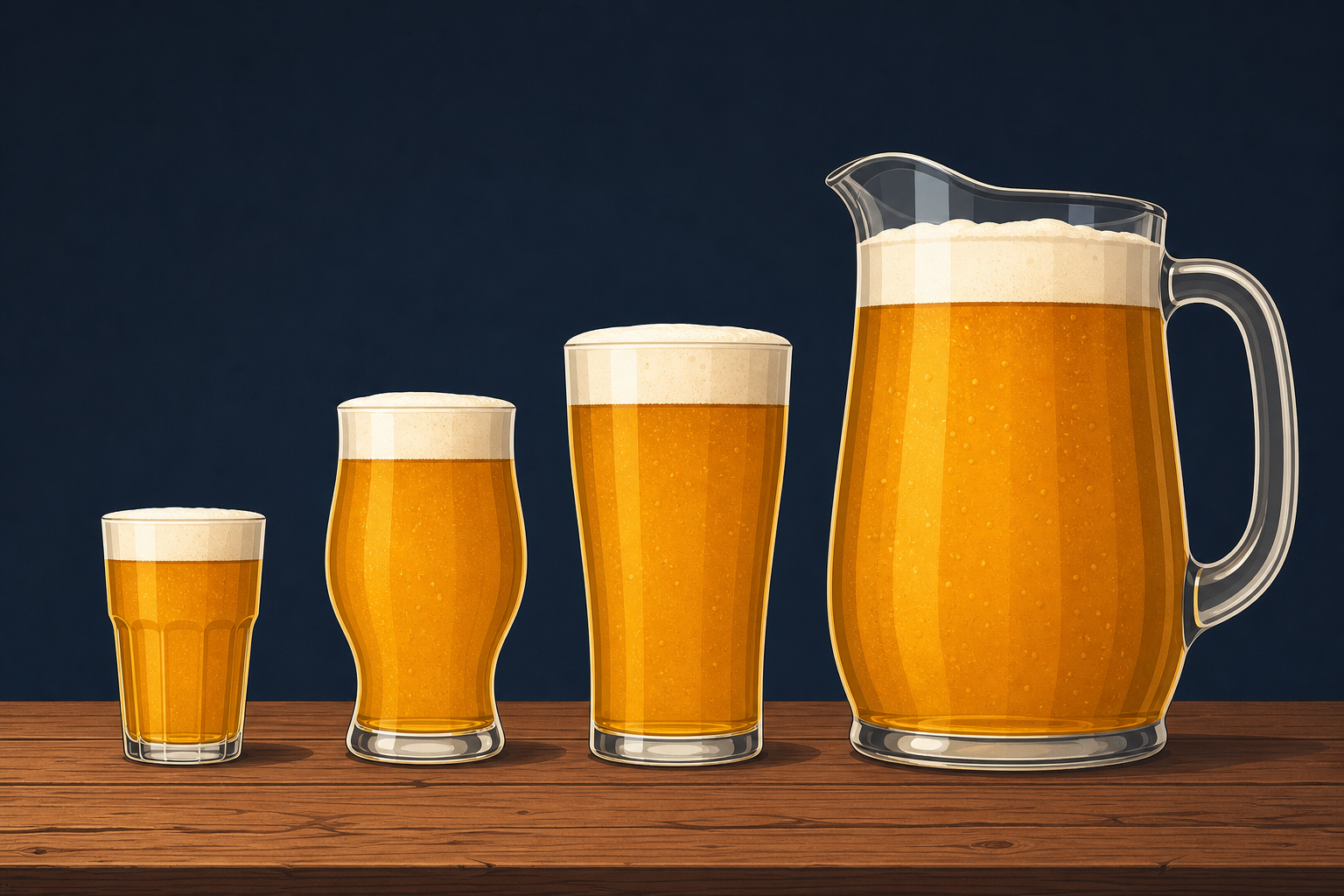
Pub and Bar Glass Sizes
Choose a glass or serve name used in the UK, US, or Australia. The usual volume in millilitres appears below. Names and sizes vary by state and venue — these are typical licensed-trade measures, not exact glassware catalogues.
How drink glass volumes are listed
Typical pub and bar serves
Glass and serve names — pint, schooner, snifter, wine glass — do not mean the same volume everywhere. This lookup lists common UK, US, and Australian licensed-trade measures and shows a typical millilitre volume for the name you select.
Figures are conventions used for education and rough comparison, not a catalogue of every manufacturer’s glassware or every state statute.
Worked example
A UK pint is usually 568 ml (imperial pint). A US liquid pint is about 473 ml. An Australian mid-sized schooner often sits near 425 ml in many venues, while names like “pot” or “middy” vary by state.
Why sizes differ
Historical gallons split UK and US customary units. Local licensing then standardised common serve names differently. Tourist menus that say “pint” abroad may quietly pour a different glass.
Common mistakes
- Using glass volume as exact alcohol units without ABV — see Alcohol Units.
- Assuming restaurant wine pours match the labelled glass capacity.
- Treating every “pint glass” filled to the brim as a legal pint (heads of foam differ).
FAQs
- Can I convert to fl oz?
- Yes — take the ml result into Liquids.
- Is this cocktail-spec accurate?
- Cocktail jigger measures are separate; this page focuses on named beer/wine-style serves.
When this page helps
Use it when you want a transparent, browser-side calculation with the assumptions spelled out — then verify anything high-stakes against primary docs, a professional, or your own measurements. The related links below point to sibling tools and longer guides when you need more context.
Accuracy notes
Results depend entirely on the numbers you enter and the simplified model described above. Device clocks, tape measurements, market rates, and recipe conventions can all differ from a perfect textbook case. If an output looks surprising, re-check units first, then re-read the formula section.
Related: Alcohol Units, Liquids, Cups & Spoons.
Last updated: July 2026