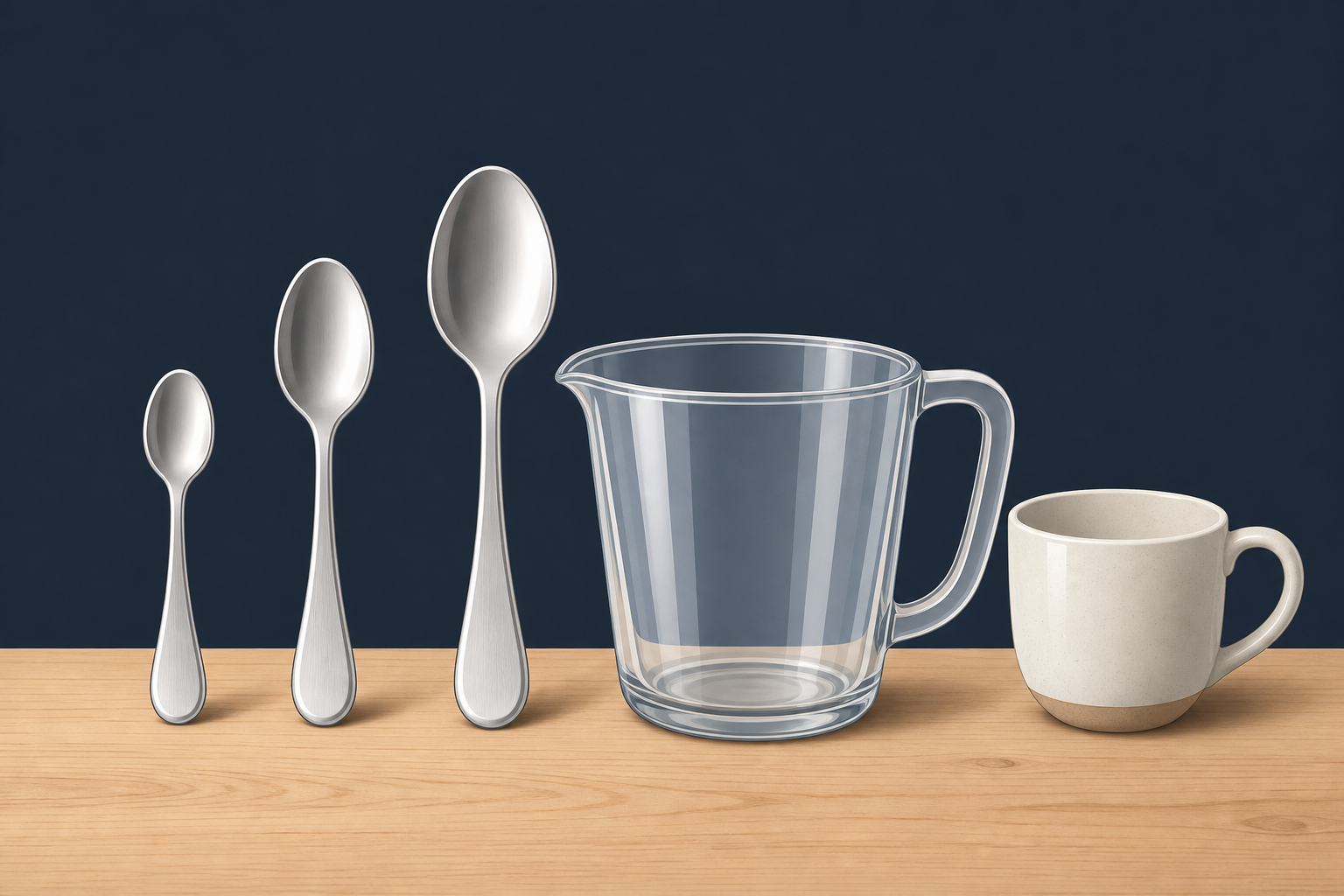
Teaspoons, dessert spoons, tablespoons, millilitres, and cups
Edit any field; metric, UK imperial, and US customary kitchen measures stay in sync via millilitres.
How metric, UK, and US kitchen measures differ
Cups and spoons are not universal
Teaspoons, tablespoons, dessert spoons, and cups come in metric, UK imperial, and US customary sizes. A US cup is commonly treated as 240 ml on labels; metric cups are often 250 ml; UK spoonfuls historically differ again. This converter synchronises those kitchen volumes through millilitres so a recipe can be translated instead of guessed.
Worked example
A US recipe calling for 1 cup of milk (~240 ml) is not the same as a 250 ml metric cup used in many modern charts. Swapping tablespoons without converting can shift salt or baking powder enough to change texture.
Practical tips
- Prefer grams for flour and sugar when a recipe provides them.
- Level spoons unless the recipe says heaped.
- Confirm which scale a “cup” means before batch-scaling.
Common mistakes
- Using a mug as a measuring cup.
- Confusing dessert spoons with tablespoons.
- Mixing liquid cups with unevenly packed dry scoops.
FAQs
- Where is the longer explanation?
- See US, UK, and metric cup sizes.
- Beer glass sizes?
- Use Drink Glasses for pub serves.
When this page helps
Use it when you want a transparent, browser-side calculation with the assumptions spelled out — then verify anything high-stakes against primary docs, a professional, or your own measurements. The related links below point to sibling tools and longer guides when you need more context.
Accuracy notes
Results depend entirely on the numbers you enter and the simplified model described above. Device clocks, tape measurements, market rates, and recipe conventions can all differ from a perfect textbook case. If an output looks surprising, re-check units first, then re-read the formula section.
Related: Liquids, Oven Temperature, Weight.
Last updated: July 2026