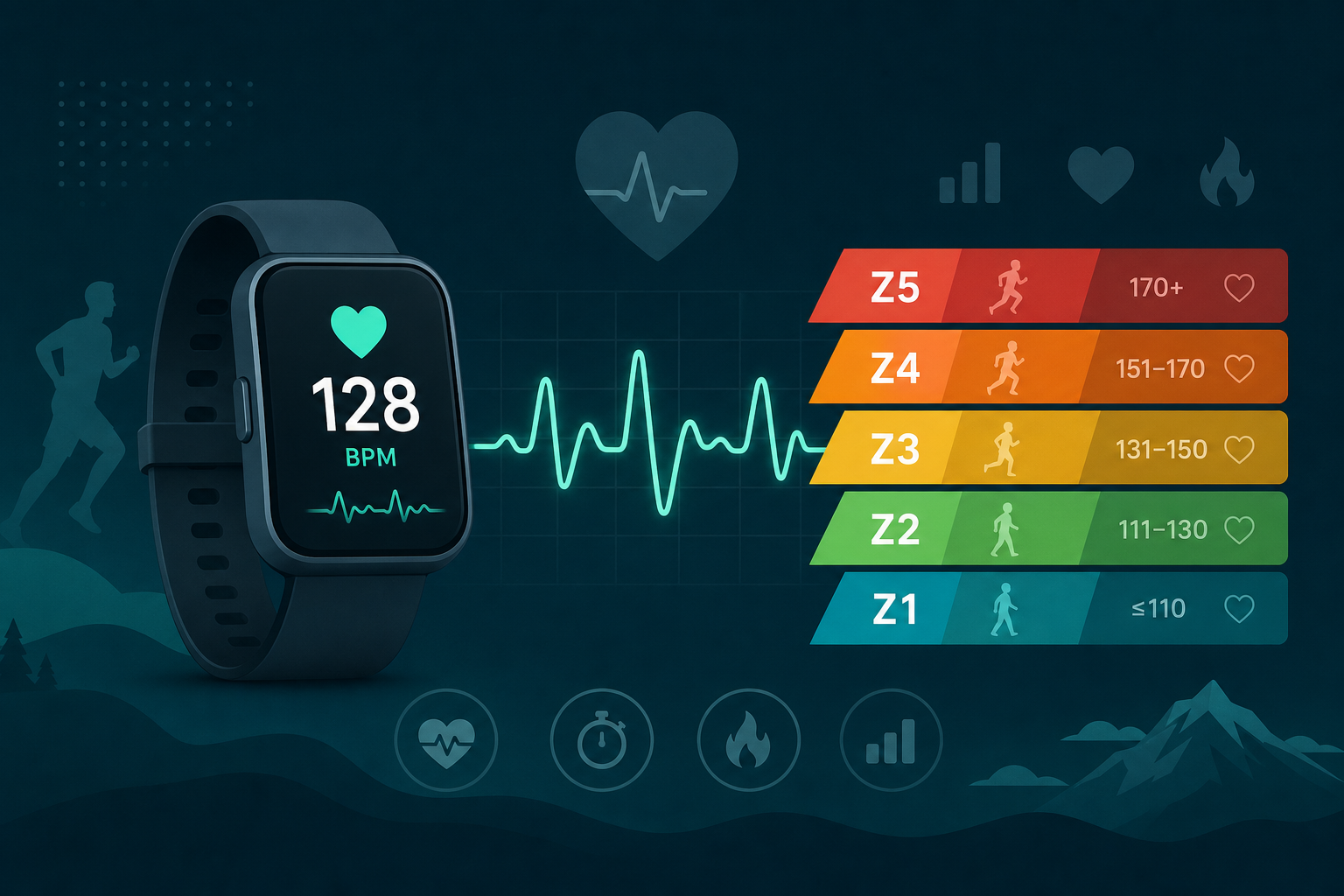
Training intensity bands
Enter age and resting pulse. Zones use both % of max heart rate and heart-rate reserve (Karvonen) so you can compare methods.
How heart-rate training zones are estimated
Max HR and Karvonen reserve methods
Heart-rate zones divide effort into easy, moderate, and hard bands using either a fraction of estimated maximum heart rate or the Karvonen heart-rate reserve method (which also uses resting heart rate). Enter age and resting HR to see zone boundaries. These are coaching heuristics, not ECG diagnostics.
Formulas (overview)
- A common max-HR estimate is 220 − age (other formulas exist).
- Simple zones scale percentages of that maximum.
- Karvonen: target = resting + % × (max − resting).
Worked example
Age 40 → rough max ≈ 180 bpm. At 60% of max ≈ 108 bpm. With resting HR 60, Karvonen 60% ≈ 60 + 0.6×(180−60) = 132 bpm — reserve methods usually sit higher than simple % of max for the same percentage label.
Common mistakes
- Wearing a loose optical wrist strap and trusting noisy spikes.
- Ignoring illness, heat, or caffeine effects on resting HR.
- Treating zone charts as medical clearance for exercise.
FAQs
- Which method should I use?
- Beginners often start with % of max; Karvonen personalises using resting HR. Field tests beat age formulas when available.
- Full guide?
- Heart-rate zones explained.
When this page helps
Use it when you want a transparent, browser-side calculation with the assumptions spelled out — then verify anything high-stakes against primary docs, a professional, or your own measurements. The related links below point to sibling tools and longer guides when you need more context.
Accuracy notes
Results depend entirely on the numbers you enter and the simplified model described above. Device clocks, tape measurements, market rates, and recipe conventions can all differ from a perfect textbook case. If an output looks surprising, re-check units first, then re-read the formula section.
Related: BMR & TDEE, Health.
Last updated: July 2026